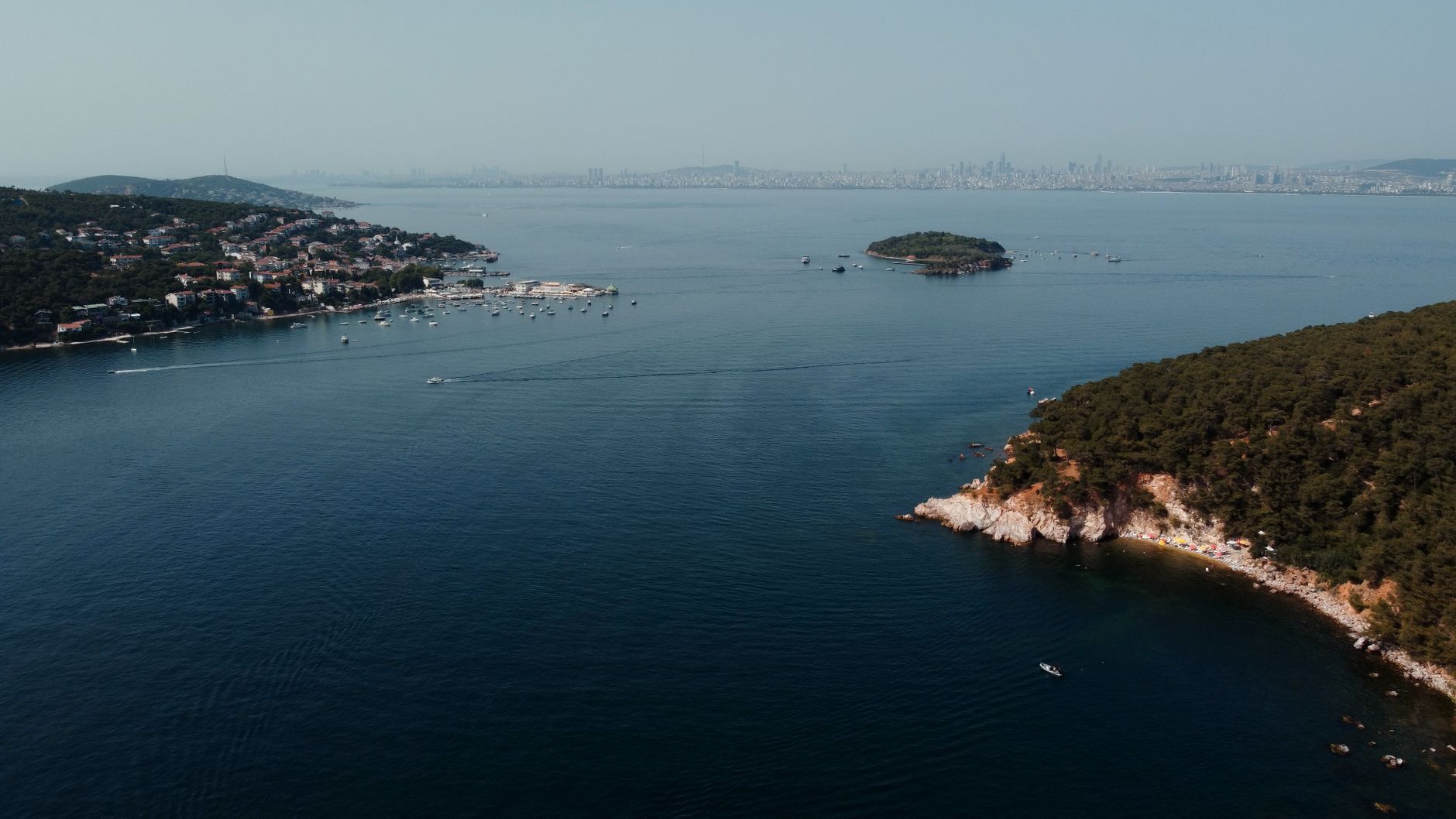
- Oldest Technical Academy in Türkiye: Established in 1773 under Sultan Mustafa III as the Imperial Naval Engineering School (Mühendishane-i Bahr-i Hümayun) by Grand Admiral Cezayirli Gazi Hasan Paşa.
- Permanent Island Home Since 1851: Relocated from Kasımpaşa to Heybeliada in 1851, creating the landmark stone waterfront barracks, ceremonial sea promenade, and Italianate clock tower.
- Last Byzantine Church of Constantinople: Encloses within its grounds the 14th-century church of Panagia Kamariotissa, the final church constructed under the Byzantine Empire before 1453.
- Famous Cadets: Trained generations of naval commanders, navigators, and statesmen, including celebrated Turkish national poet Nazım Hikmet (enrolled 1913).
1773: The Birth of Ottoman Naval Engineering
The origins of the Heybeliada Naval High School (Heybeliada Deniz Lisesi) are rooted in one of the most critical military turning points in Ottoman history: the Battle of Chesma (Çeşme) in 1770, during which a Russian imperial fleet annihilated the Ottoman Mediterranean squadron. Recognizing the catastrophic deficit in modern navigation, mathematics, cartography, and naval gunnery, Grand Admiral Cezayirli Gazi Hasan Paşa petitioned Sultan Mustafa III to establish a dedicated higher academy for scientific naval officers.
Founded in 1773 inside the Imperial Naval Dockyards (Tersane-i Amire) at Kasımpaşa on the Golden Horn under the name Mühendishane-i Bahr-i Hümayun, the academy was the very first higher institution of technical and engineering education in the Ottoman Empire. French, British, and Genoese naval architects were hired to instruct young cadets in spherical trigonometry, celestial navigation, hydrography, and artillery ballistics.
1851: Establishing the Heybeliada Campus
By the mid-19th century, the growing complexity of steam-powered ironclads and the cramped industrial conditions of the Golden Horn prompted the Ottoman Admiralty to seek an open, maritime island setting where young cadets could combine rigorous classroom study with real open-sea sailing drills.
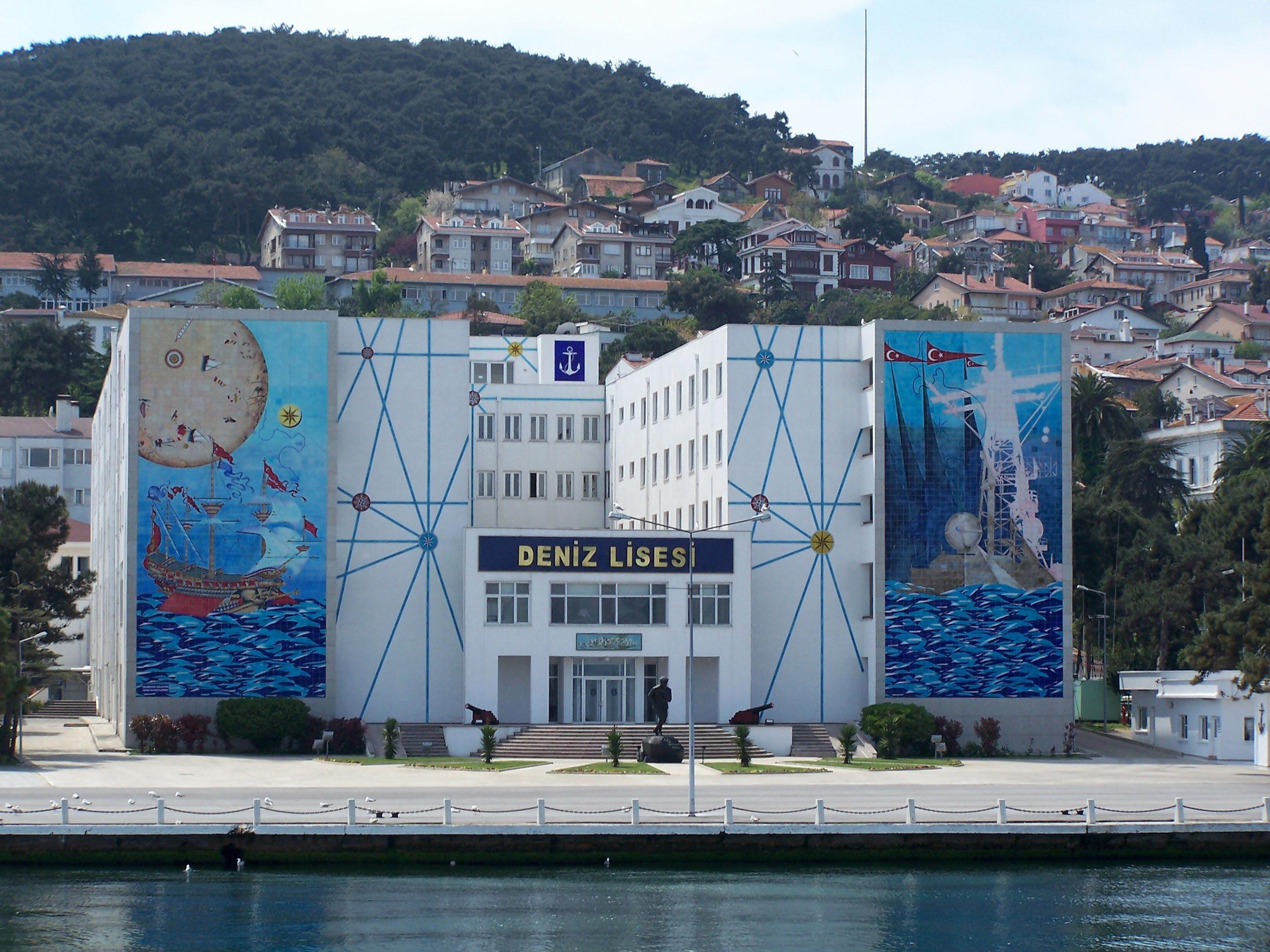
In 1851, during the reign of Sultan Abdülmecid I, the academy acquired the northern waterfront peninsula of Heybeliada. Here, architects constructed an imposing stone neoclassical campus facing directly across the Marmara toward Istanbul. The complex featured vast stone barrack dormitories with arched colonnades, physics and chemistry laboratories, an enclosed boat basin for training cutters, and a grand ceremonial parade ground along the water's edge where naval brass bands played martial marches during morning flag-raising ceremonies.
The Clock Tower & Waterfront Architecture
The most iconic architectural silhouette greeting ferry passengers arriving at Heybeliada is the academy's four-story red-brick and stone Clock Tower. Built in late-Ottoman Italianate style, the tower stands vigilant over the harbor basin, marking the precise maritime hour for both naval cadets and civilian ferry skippers.
Beside the tower, the historic waterfront parade ground is bordered by ancient anchor chains, vintage bronze naval cannons salvaged from 19th-century galleons, and the stone slipways where wooden rowing gigs (filikalar) were launched for the grueling 10-kilometer inter-island rowing races that pitted Heybeliada cadets against rivals from the Naval War College.
Panagia Kamariotissa: The Last Byzantine Church of Constantinople
Preserved within the secure military perimeter of the Naval Academy lies one of the most poignant and historically valuable ecclesiastical monuments in Istanbul: the church of Panagia Kamariotissa (Meryem Ana Kilisesi).
Originally built in the 14th century by Maria Palaiologina (daughter of Emperor Michael VIII Palaiologos), the current cross-in-square brick chapel was rebuilt in 1341 and restored around 1450. Archaeological historians recognize it as the very last church constructed under Byzantine imperial rule prior to the conquest of Constantinople by Sultan Mehmed II in 1453. Surrounded by ancient pine trees behind the cadet barracks, the church features remarkable brick dentil friezes, barrel-vaulted arms, and original stone capitals, standing as a living witness to the layered civilizational continuity of Heybeliada.
Cruise Past Heybeliada's Historic Naval Shorelines
Experience the majestic stone ramparts and red-brick clock tower of the Turkish Naval Academy from the sea. Book our top-rated Princes' Islands cruise with onboard lunch and guided island walking stops.
Cadet Life & The Literary Legacy of Nazım Hikmet
Life at Heybeliada Deniz Lisesi was legendary for its ascetic discipline, athletic rigor, and brotherhood. Cadets were awakened at dawn by bugle calls reverberating through the saddle valley, followed by maritime calisthenics on the stone pier, rowing drills in heavy seas, and intense studies in naval mathematics and literature.
In 1913, an 11-year-old boy named Nazım Hikmet Ran enrolled as Cadet #263. Over the next six years at Heybeliada, under the mentorship of naval instructor and literary scholar Yahya Kemal Beyatlı, young Nazım discovered his poetic voice, penning verses inspired by the wind in the island’s pines, the rolling Marmara waves, and the stoic resilience of naval sailors. Nazım graduated from the naval deck officer division in 1918 before medical discharge redirected his path toward becoming Turkey's most celebrated 20th-century modernist poet.
Modern Heritage Status & Waterfront Photography
Following national defense restructuring in 2016, secondary military high schools across Türkiye were reorganized under the National Defense University (Milli Savunma Üniversitesi). The Heybeliada campus is preserved as a premier historical naval site, naval museum annex, and training facility.
While the interior academic barracks and Kamariotissa church grounds are restricted active military facilities (closed to unscheduled civilian walk-ins), the public can admire the monumental stone neoclassical facades, grand iron entrance gates, and clock tower from the open seaside promenade (Rıhtım Caddesi) and from passenger ferries entering the harbor basin. The best photographic perspective is captured from the starboard deck of incoming Şehir Hatları ferries during the golden hour before sunset, when the late afternoon sun illuminates the red brick tower and reflects upon the calm waters of the basin.